

Shipping News and Baltic Indices:
- India may be sitting on an oil jackpot in Andaman Sea that could transform its Economy
The Union Minister Hardeep Puri suggesting it could mirror the scale of Guyana’s transformative offshore find. India may be inching closer to a game-changing offshore oil discovery in the Andaman Sea — one that could hold as much as 184,440 crore litres of crude oil and rival Guyana’s transformational find, Union Petroleum and Natural Gas Minister Hardeep Singh Puri hinted in an exclusive interview.
- Australia’s economy and budget need further ballast to withstand the latest rounds of global volatility
- Iron ore headed for the lowest close since September on a seasonal slowdown in demand and signs Chinese mills are curbing steel output. Futures fell for a fourth day in Singapore, sinking below $93 a ton. Rain in southern China and heatwaves in the north have slowed construction, Shanghai Metals Market said.
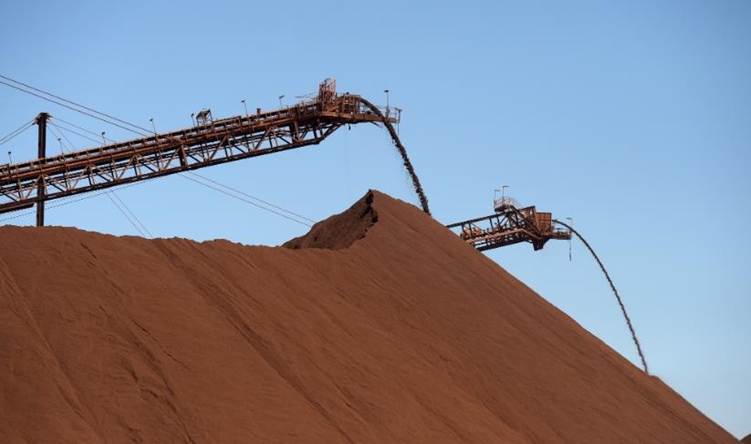
Iron ore falls onto stockpiles at the Fortescue Metals Group Ltd. Cloudbreak mine in the Pilbara region of Western Australia.
- Prime Minister Anthony Albanese’s first in-person meeting with Donald Trump was cancelled after the president decided to leave a Group of Seven summit early to focus on the conflict between Israel and Iran, in a blow to the Australian government’s hopes for progress on tariff talks. Despite the
cancellation, the American Chamber of Commerce in Australia says there are still positive signs for the relationship between Washington and Canberra, and sees a chance for the leaders to meet at the next Quad gathering in India.
- Australia’s Port of Darwin has become a lightning rod for the fragile relationship between the US and China — but while national security concerns are warranted for many of the ports that Beijing controls or owns, this is hardly the one to worry about.
- President Donald Trump’s meeting with his national security team in Washington on Tuesday lasted over an hour and the White House provided no immediate statement afterward. Trump posted a demand for Iran’s “UNCONDITIONAL
SURRENDER” and warned of a possible strike against the country’s leader, Ayatollah Ali Khamenei.
- Abu Dhabi is boosting its ambitions to build a top liquefied natural gas producer with its biggest energy deal, as the petrostate targets a market it sees as key to its economic growth, leading a group that’s offered $19 billion for Australia’s Santos.
- International shipping accounts for more planet-warming greenhouse gas emissions than Japan. But the commercial shipping industry is chasing a novel carbon-free propulsion technology as it pursues a lofty climate goal: nuclear power.
- Donald Trump met with his national security team for more than an hour to discuss the Mideast conflict, people familiar said, fuelling speculation the US may join Israel’s attack on Iran. The US State Department closed the embassy in Jerusalem through Friday.
- Oil traded near a five-month high as Israel and Iran each indicated they plan to ratchet up the conflict. Tehran prepared missiles to strike regional US bases should Washington join the war.
- London’s sky-high rents are even pushing room-to-let seekers out of the market, with the number of flat sharers declining steadily since 2022, according to SpareRoom. The drop comes as the outlook is being darkened by rising bills, a deteriorating labour market and the US trade war, which is showing some signs of undermining confidence in the economy.
- Hedge funds are rushing into Dubai and Abu Dhabi as they try to keep star traders happy. Escalating conflict in the region hasn’t deterred them so far.
- Lured by zero personal income tax, a time zone that talks to both East and West and a lifestyle tailor-made for the rich, many traders have been demanding to relocate despite the heightened regional tensions of the past two years.
- London is the city that has lost by far the biggest number of jobs to the UAE.
- Dubai is home to more than 75 of these firms, up from 10 or so a decade ago. Its finance hub is building more office blocks, and a
site for hedge funds. The workforce on Al Maryah Island, home to
Abu Dhabi’s hub, rose 17% in a year.
- Israel’s war with Iran is really three conflicts. It’s waging a war for the Middle East, a war for nuclear non-proliferation, and a war against an axis of aggressors that is testing the International order on several fronts.
- The EU is rushing to get its European Defence Industry Programme, or EDIP, over the line before leaders meet in Brussels at the end of June. The instrument will serve as a vehicle for the bloc’s future defence funding. While seemingly small with just €1.5 billion from the EU budget for 2025-2027, it may grow rapidly. The commission is offering member states the option to channel unspent pandemic recovery money into the fund, we’ve learned. What’s still to be sorted is the level of openness to use those resources to buy US weapons, a thorny issue given delicate trade talks with Washington. Separately, the commission is proposing to cut red tape to accelerate the continent’s defence build-up.
- An EU proposal to ban Russian gas imports by the end of 2027 is poised to face some pushback. Some member states fear it will raise energy prices and cost companies millions of euros in legal fees. While no longer the bloc’s biggest supplier, Russia still accounts for almost a fifth of European demand.
- Donald Trump raised the pressure on Iran and pushed for an “unconditional surrender” in its fight with Israel. Iran’s Supreme Leader is safe “for now” but “our patience is wearing thin,” Trump said. The president met with his security team, fuelling speculation that the US may join Israel’s attack on Iran. Satellite images suggest Israeli strikes damaged Iran’s underground uranium-enrichment facilities at Natanz. Israel’s defence minister said the country plans to attack “very significant targets” in Tehran. Investors were jittery: US stocks fell, oil rose and
the dollar climbed the most in a month.
- Xi Jinping said China is “deeply worried” about the worsening tensions in the Middle East and is ready to play a constructive role in restoring peace. On other matters, he said there are no winners in trade conflicts and pledged 1.5 billion
yuan ($209 million) in aid this year to central Asian nations as it seeks closer ties with the region.
- Try as they might, it appears Western nations will take years to develop enough rare-earth processing capacity to limit China’s dominance over the critical ingredients. Beijing tightened sales of seven rare earths in April, in response to aggressive tariffs from Washington. While Trump and Xi Jinping came up with a framework to resume some shipments, it still leaves the US and allies in need of home-grown solutions.
- The Trump administration is using Cold War-era
powers to prioritize and fund rare-earth mining projects it deems strategic. It will be a “long, hard process” to loosen China’s grip, according to industry veteran Mark Smith. The former boss of Molycorp was running the only rare-earth mine in the US when China cut off exports to Japan 15 years ago.
- Chevron just made its first foray into lithium with land deals in Texas and Arkansas aimed at building a domestic “commercial scale” business. The 125,000 acres are in an underground rock formation that holds a high lithium concentration. And Boston- based startup Pure Lithium is working on a new type of battery that’s completely manufactured domestically and free of graphite, nickel, cobalt and manganese—allowing it to be produced without any inputs from China.
- Volkswagen-backed Scout Motors is engineering some components like brakes and drive units to reduce the need for rare earth materials, according to the CEO of the upstart electric- vehicle automaker.
· “Unconditional Surrender” Approaches
As the US and Israel increase pressure on Iran, speculations are emerging that the US is preparing to intervene more directly. President Trump posted on social media about Iran’s Supreme Leader Ayatollah Khamenei, “We know perfectly well where he is hiding. At least for now, we have no intention of eliminating (killing) him.” He said, “Patience is running out,” and called for Iran to ” unconditionally surrender .” According to a person familiar with the matter, President Trump held a meeting with his national security team in Washington on the afternoon of the 17th.
· Unable to convince
At a dinner discussion on the 16th, G7 leaders barely managed to get
U.S. President Donald Trump to agree to tougher sanctions on
Russia, according to a person familiar with the matter. Trump has called on Russian President Putin to agree to a ceasefire in Ukraine, but has only threatened to tighten sanctions and resisted implementing them. At the G7 meeting, he said sanctions would impose a huge financial burden on the U.S., further irritating allies. Both the European Union and Britain are pushing for a lower price cap on Russian oil, but the U.S. is opposed.
- Oil Prices Jump, but Middle East Oil keeps flowing uninterrupted. Despite heightened tensions between Israel and Iran and resulting market speculation, oil supply from the Middle East remains largely unaffected, with the critical Strait of Hormuz open for navigation.
Can Canada Replace Russia as an Oil and Gas Superpower?
- While Canada holds significant oil and natural gas reserves, it currently produces substantially less than Russia, making a full replacement challenging.
- Canada’s energy sector faces regulatory hurdles that hinder its ability to rapidly increase production and exports to meet global demand.
- Despite having the resources, Canada’s infrastructure and government policies need adjustments to compete with established energy exporting countries like Russia and the United States.
Tankers Reportedly Ablaze Near Strait of Hormuz
- Three tankers are reportedly on fire in the Gulf of Oman, with conflicting reports about the cause including a possible collision.
- The incident occurs amid heightened tensions in the region, particularly between Israel and Iran, which has threatened to close the Strait of Hormuz.
- The Strait of Hormuz is a critical chokepoint for global oil trade, handling over 20 million barrels daily, making the incident a significant concern for international markets.
- Three tankers are reportedly on fire in the Gulf of Oman, according to social media posts, as cited by the Hindustan Times.
- Kpler energy analyst Amena Bakr said on X that a British maritime security provider had reported it was aware of an unspecified incident in the area.
- An outlet for shipping news published a YouTube video saying two tankers had collided in the Gulf of Oman.
- The Strait of Hormuz is currently attracting a lot of attention amid the war between Israel and Iran, and the fact Iran has threatened in the past to close the chokepoint in case of hostilities against it.
- Israel Shuts Leviathan Gas Field Amid Iran Conflict, Choking Supply to Egypt
- Israel’s Energy Ministry ordered Chevron to shut down the Leviathan gas field amid heightened regional threats following strikes on Iran.
- Egypt, reliant on Israeli gas during peak demand, now faces a supply crunch and may turn to costly emergency LNG imports.
- The disruption has raised global alarm, sending European gas prices higher and highlighting vulnerabilities in East Med energy corridors.
- Israel has ordered the shutdown of its massive Leviathan gas field, cutting off a critical supply line to Egypt just as regional tensions with Iran erupt into open conflict.
- Chevron, the operator of Leviathan, confirmed the halt on Friday after Israel’s Energy Ministry issued the order, citing escalating security threats. Energean Plc also suspended output from its Israeli assets. The Leviathan shutdown is already impacting gas flows to Egypt, according to sources close to the pipeline network.
- Egypt, facing peak summer demand and a widening domestic gas shortfall, now faces the prospect of emergency LNG purchases ahead of schedule—tightening an already brittle global gas market. European gas prices spiked as much as 6.6% Friday on the news.
- The Leviathan field, located in the Levant Basin, is Israel’s largest energy asset with 22.9 trillion cubic feet of recoverable gas and had been exporting record volumes to Egypt—981 million cubic feet per day in 2024, an 18% year-over-year surge. Egypt, with declining domestic production and LNG export ambitions, had increasingly leaned on Israeli imports to fill the gap.
- Chevron’s Tamar field remains operational, and Energean’s Karish field continues to serve domestic Israeli demand. But if shutdowns persist, Egypt’s LNG export capacity—and its own power grid— could be strained, and Jordan’s access to gas also stands at risk.
· MOL, Petronas, and MISC launch liquefied CO2 shipping venture
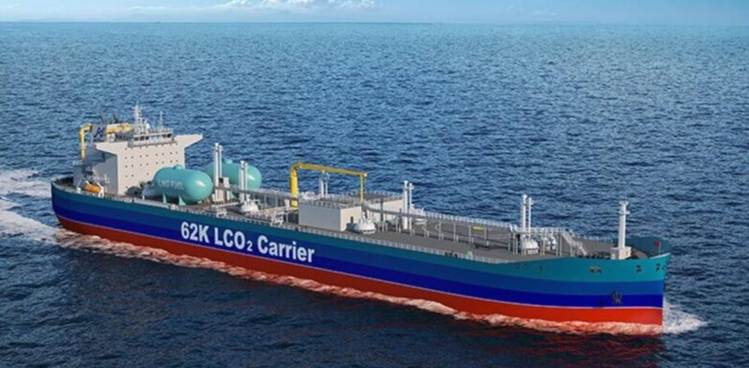
- Japanese shipping giant Mitsui OSK Lines (MOL), Malaysian state energy firm Petronas and the country’s top shipping line, MISC, have launched a joint venture to build and operate liquefied carbon dioxide (LCO2) carriers.
- The JV called Jules Nautica will aim to become a leading owner of LCO2 carriers, facilitating the transportation of LCO2 to designated CO2 storage sites across the Asia Pacific region, the companies said in a joint release.
- The new company plans to work closely with both carbon-emitting industries and CO2 storage providers to create an integrated supply chain that addresses growing environmental and regulatory demands, the trio added.
- The partners recently completed front-end engineering design (FEED) for a 62,000-cubic-meter LCO2 carrier, developed by the Shanghai Merchant Ship Design and Research Institute (SDARI). The vessel has received preliminary approval from DNV,
positioning it as one of the most advanced low-pressure, low- temperature LCO2 carriers in the industry.
- “This joint venture will play a crucial role in the transportation of LCO2, which is indispensable for cross-border CCS projects. The three companies coming together emphasize the need for collaboration within the industry to help realize CCS, said Takeshi Hashimoto, MOL’s president and CEO, adding that the collaboration will lead decarbonisation efforts beyond Malaysia and Japan and will “contribute to the realisation of a carbon-neutral society.”
- In related news, K Line Energy Shipping (KLES), a London-based subsidiary of another Japanese shipowner Kawasaki Kisen Kaisha (K Line), and Singapore-based floater owner and operator Yinson Production, part of the Malaysian Yinson Group, announced a collaboration to develop floating storage and injection units (FSIUs) and LCO2 carriers for European CCS projects.
· South Korea’s top shipyard debuts its own sail device
- With wind-assist technology going mainstream, South Korea’s
largest shipbuilding group has debuted its only sail system.
- HD Korea Shipbuilding & Offshore Engineering, the holding company of HD Hyundai, has unveiled its Hi-Wing, a prototype of which has gone through land trials, and will shortly be tested at sea on an MR tanker belonging to HMM, South Korea’s flagship line.
- The 30 m high hard sail can be folded down in bad weather to protect navigational stability.
- There has been a rapid uptake of wind-assist technology in the global fleet since 2021, with 52 seagoing ships now in operation and 97 newbuilds with wind tech in the orderbook as of January 2025, plus many more ships earmarked for retrofitting, according to a recent white paper from DNV. Currently, 75% of the wind- assist fleet are retrofits.
- For bulkers and tankers, today’s dominant wind technologies are
rotor sails (54%), while for general cargo ships the dominant
technology is suction sails (67%). In total, rotor sails make up almost 50% of the current overall uptake.
· Laden Frontline VLCC collides with shadow suezmax tanker off Khorfakkan
- A collision occurred at 1:14 am Dubai time overnight between two tankers, the Antigua Barbuda-flagged Adalynn suezmax, part of the shadow fleet, and the Liberian-flagged Front Eagle VLCC, near the Khorfakkan anchorage in the Gulf of Oman. The impact resulted in a fire aboard the Adalynn and prompted the swift evacuation of its entire crew.
- The incident highlights the persistent navigational challenges in one of the world’s busiest maritime arteries with clear GPS spoofing involved in the run-up to the accident, and comes at a
time when ship operators are under increased pressure in the region thanks to the ongoing conflict between Israel and Iran.
- According to MarineTraffic data, the five-year-old Front Eagle was laden with crude oil and en route to Zhoushan, China, at the time of the incident. The 23-year-old Adalynn had just departed from anchorage in ballast when the collision took place approximately 22 nautical miles east of Khorfakkan. While initial reports from social media and some maritime security firms suggested a third vessel might have been involved, playback data indicates that the collision was exclusively between these two ships.
- Following the collision, the Front Eagle reported its status as Not Under Command.
- A spokesperson for Frontline said that following the incident immediate action was taken to extinguish a fire on deck of the Front Eagle.
- “A full investigation will be carried out
to determine the cause of the maritime incident. This is a navigational incident and not related to the current regional conflict.” the spokesperson said.
- Eyewitnesses confirmed that the Adalynn sustained damage to its bunker tanks, leading to the onboard fire.
- The UAE National Guard swiftly responded to the distress call. Early this morning, the Coast Guard of the National Guard successfully evacuated all 24 crewmembers from the Adalynn.
The crew was safely transported from the incident site to the port of Khorfakkan using search and rescue boats. Authorities have confirmed that all crewmembers from both vessels are safe, and no casualties have been reported.
- Officials state that, at present, no foul play is suspected, and the fires have been contained. An investigation into the cause of the collision is underway.
- This incident occurs amidst recent warnings from the UK Maritime Trade Operations (UKMTO) and the US-led Combined Maritime Force’s Joint Maritime Information Centre (JMIC) regarding increased electronic interference in the region, particularly near Iran’s port of Bandar Abbas, which has affected vessels’ ability to accurately transmit AIS positional data. Voyage playback shows the Front Eagle’s trip was clearly hit by GPS spoofing.
· Diana ships out 15-year-old panamax
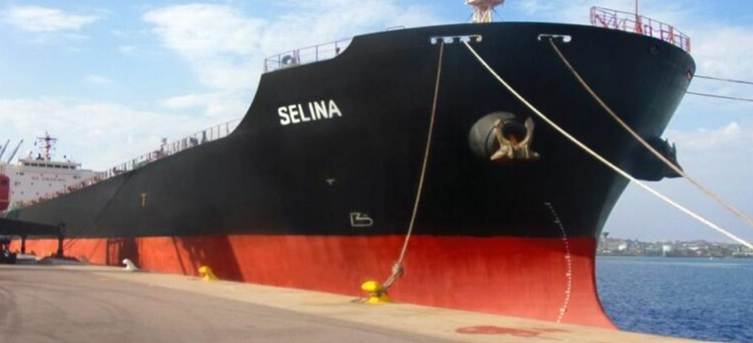
- Greek bulker owner Diana Shipping has struck a deal to sell its 15- year-old panamax to an undisclosed buyer.
- The New York-listed company is offloading the 75,700 dwt Selina
after more than nine years for $11.8m, before commissions.
- The Jiangnan Shanghai Changxing-built vessel, estimated at
$12.35m by online pricing platform, was acquired by Diana for
$10.9m. The ship is currently on charter with Reachy Shipping, earning $6,500 per day until July 9.
- In February, the Semiramis Paliou-led company also sold the 2010-built post-panamax bulker Alcmene for about $11.9m.
- The latest sale should close by August 15, reducing Diana’s fleet
to 36 bulkers, of which five panamaxes.
· What a deal with Iran would mean for the tanker trades
Donald Trump claims a potential breakthrough in US-Iran nuclear negotiations is near.
- The prospect of the United States lifting sanctions on Iran has dominated tanker trade headline all month. Recent developments, including US president Donald Trump’s comments suggesting a potential breakthrough in US-Iran nuclear negotiations, have raised expectations of increased Iranian crude exports.
- Kpler analysts project that a finalised deal could stabilise Iranian crude exports at approximately 1.65m barrels per day, with a potential upside of 100,000 barrels per day. In contrast, a no deal scenario may lead to a 500,000 barrels per day decline in exports by year-end. Currently, Iranian exports average 1.60m barrels per day, slightly lower than the second half of 2024 but still resilient. However, declining Chinese imports and increasing floating storage suggest market challenges.
- The lifting of sanctions would likely lead to increased Iranian crude exports, necessitating additional tanker capacity.
- Analysts at SEB, a Swedish bank, note that the return of Iranian crude to compliant markets could benefit the tanker sector, particularly crude tankers. However, the potential reopening of the Red Sea route may introduce new dynamics, potentially impacting tanker demand.
- A US source highlighted the significance of the Iranian-controlled tanker fleet and the broader dark fleet that has supported sanctioned trades over the past seven years. The return of National Iranian Tanker Company (NITC) vessels to the international market could displace older, less efficient vessels, positively affecting tanker demand. However, NITC fleet’s aging
vessels may require maintenance and vetting before re-entering the market.
- A UK Source suggested that a US-Iran nuclear deal could be bullish for VLCCs. The reactivation of floating storage and the cessation of ship-to-ship (STS) transfers for Iranian exports would likely increase demand for compliant tankers. Additionally, the potential for increased Iranian oil exports could put downward pressure on oil prices, influencing freight rates.
- Another UK research source discussed the broader market impact, noting that increased Iranian oil on the water could pressure oil prices and affect shale producers in the US. This dynamic could complicate OPEC+ production policies and influence tanker demand patterns.
- Some shipbrokers observed that a successful deal may accelerate the scrapping of older dark fleet vessels, leading to a reduction in the active tanker fleet. This reduction could improve overall market conditions by decreasing excess supply and enhancing fleet quality. The average age of vessels in the NITC fleet is 17 years, and the Islamic Republic of Iran Shipping Lines operates ships averaging around 18 years old. Modernising Iran’s maritime fleet would require significant investment and time.
- The potential lifting of US sanctions on Iran presents both opportunities and challenges for the global tanker trade. While increased Iranian crude exports could boost tanker demand, the return of Iranian-controlled vessels and the broader dark fleet may introduce complexities. The tanker sector’s response will depend on factors such as fleet modernisation, maintenance requirements, and broader market dynamics.
· Dry Bulk: The Drifters – Where’s all the volatility gone?
As the world waits for a US-China trade deal, it would appear that dry bulk trade is largely flatlining. The Baltic Dry Index looks like repeating last year’s performance of being the least volatile year since 1999. FFA traders have been complaining of a lack of volatility in the forward curve. They report a fear of enough oversupply to cap earnings but not enough
to force earnings down to a level where owners begin to consider accelerating demolition plans for elderly tonnage.
There has been some month-o-month movement in earnings. After Lunar New Year affected Capesize markets, driving the average TCE for February down to $7,936, it rebounded in March to $20,802 only to subside in April to $16,022 then subside again in May so far to $15,437. On the Australia to China route, earnings were actually up 50% on May 23 compared to April 23, at $17,837 compared to $11,892, but the high percentage only indicates the mediocrity of the quanta. On the Brazil to China route, earnings fell 4% over 30 days to $14,574 on May 23.
We’re on track for the least volatile year this century
April-May 2025 : In the Atlantic, the round voyage from and back to Europe sat at an opex-ish $9,873 a month ago, rose to $12,466 on May 9 then petered out, falling back to $9,805 on May 25. The trip out from Europe to China is basically unchanged for an entire month at $17,117 per day. The Mississippi to Qingdao voyage lost 2% over 30 days to May 25 to snooze at $17,607. The Santos to Qingdao grains / beans voyage, despite a switch in Chinese purchases from the US to Brazil, slipped 8% to an unenviable $11,916 per day.
The Northeast Asia round voyage traded mostly between $11,000 and
$12,000 in April, ending the month at $11,043, but lost ground in May, bottoming out at $9,896 on May 13 and barely recovering to $10,302 as of May 23, down 15% over 30 days earlier. The South China to Indonesia coal voyage was also 15% lower on May 23 than on April 23, at $9,414 – you can read a variety of views on the outlook for Chinese coal consumption in our recent coverage of the Geneva Dry event. The mammoth, 105-day, Singapore to east coast South America round voyage was rated at $12,895 on April 23 and has moved little since before falling in late May to $12,166 as of the 23rd. Overall the P5TC average for May to date is $11,867 following $11,951 in May and
$11,411 in March. So far, so Meh.
Life has been slightly more interesting for Ultramax bulk carrier operators. Rates from the USG to NE Asia rose 27% to $18,714 on May 23, via a peak of $18,800 two days earlier. Ships ballasting from the Indian Ocean to S Africa to load coal for China discharge were assessed at $13,500 per day for the voyage as of May 23, 18% higher than 30 days earlier.
West Africa was a happy hunting ground for some Ultramaxes, with day rates via the east coast of South America to Europe swelling by 25% over 30 days to $13,307 per day as of May 23. The long voyage from West Africa via the east coast of South America to North China however only added a dysfunctional 3% over the 30 days to May 23 to sit at
$14,136. In the Atlantic, a trip westbound from Europe to the US Gulf was rated at a dank $8,236 per day on May 23, down 11% on the month, while the reverse voyage was a sunny 31% more remunerative over the same dates, rising from $14,261 to $16,636. The last three monthly average earnings for Ultramaxes have been $9,865 then
$10,093 and in May to date, $10,260. At least the direction is correct, from an Owner’s perspective.
Handysize bulker owners have less to cheer this month as average earnings to date for May are $10,067 after $10,514 in April and $10,415 in March. The best performing route in Asia has been the round voyage from and to Southeast Asia which has risen 9% to $10,919, while the in the Atlantic the Brazil to Europe voyage has also increased by 9% to
$15,800. The reverse route however is down 5% at $6,234. The more northerly trip from western Europe to the US Gulf lost 6% over the month to land at $8,664 on May 23.
Overall, May has been a lull in the freight market. Seasonal patterns suggest that earnings should lift off from here to their October peak.
Political patterns suggest that all bets are off for the balance of 2025.
· BALTIC INDICES 17/06/2025
- DRY INDEX: 1952 (- 23)
CAPESIZE INDEX: 3660 (- 71)
PANAMAX INDEX: 1406 (- 4)
SUPRAMAX INDEX: 945 (+ 6)
HANDYSIZE INDEX: 614 (+ 7)
- BCI TC AVG $/DAY 30357 (- 587) BPI82 TC AVG $/DAY 12652 (- 42) BSI TC AVG $/DAY 11944 (+ 71) BHSI TC AVG $/DAY 11052 (+ 130)
- TIMECHARTER
- ‘Iole R’ 2008 83684 dwt dely aps EC South America
27/28 Jun trip redel Singapore-Japan $16,000 +
$600,000 bb – Bunge
‘Greneta’ 2010 82166 dwt dely Bayuquan 18/20 Jun trip via NoPac redel Philippines $11,000 – Olam Intl
‘Santa Adriana’ 2013 77040 dwt dely Incheon 13 Jun trip via Philippines redel Japan $11,700 – NS United
VOYAGES ORE
‘Star Shibumi’ 2021 180000/10 Itaguai/Qingdao 3/5 Jul
$27.95 fio 60000shinc/30000shinc – CSN – <16/6 fixture>
‘TBN’ 170000/10 Tubarao/Qingdao 5/11 Jun $26.00 fio 3 days shinc/30000 shinc – Norden
‘Oldendorff TBN’ 170000/10 Tubarao/Jaigarh 15/19 Jul $22.50 fio 3 days shinc/30000shinc – Vale – <16/6 fixture>
COAL
‘TBN’ 70000/10 Newcastle/Haimen 1/10 Jul $14.15 fio 35000shex/10000shinc – Welhunt
Baltic Exchange Index – 17 JUNE 2025 Baltic Exchange Capesize 182 Index
Route Description Value Change
===== ==========================================
C8_182 182000mt Gib/Hamburg transatlantic RV 42,750 + 1050 C9_182 182000mt Cont-Med trip China-Japan 60,225 + 894 C10_182 182000mt China-Japan transpacific RV 29,364 – 2531 C14_182 182000mt China-Brazil round voyage 30,855 – 1475 C16_182 182000mt Backhaul 9,658 + 127
=================================================
C5TC 182 Weighted Timecharter Average 33,139 – 970
Baltic Exchange Index – 17 JUNE 2025
Baltic Exchange Capesize Index 3660 (- 71)
Route Description Value($) Change
====== =================================== =======
C2 160000mt Tubarao to Rotterdam 11.287 – 0.034
C3 160-170000mt Tubarao to Qingdao 26.075 – 0.525
C5 160-170000mt W Australia to Qingdao 10.420 – 0.570
C7 150-160000mt Bolivar to Rotterdam 17.194 + 0.137 C8_14 180000mt Gibraltar-Hamburg T/A RV 38,051 + 944
C9_14 180000mt Conti/Med Trip China/Japan 55,626 + 563
C10_14 180000mt China/Japan T/P RV 26,082 – 2413 C14 180000mt China-Brazil RV 26,965 – 1160 C16 180000mt N.China to Skaw-Passero 5033 + 2
C17 170000mt Saldanha Bay to Qingdao 19.456 – 0.294
========================================== =======
5TC Weighted Timecharter Average 30,357 – 587
Baltic Exchange Panamax 82500mt Index 17 JUNE 2025 Baltic Exchange Panamax Index 1,406 (- 4)
Route Description Value ($) Change
====== ========================= ======== ====== P1A_82 Skaw-Gib T/A RV 12,841 + 86
P2A_82 Skaw-Gib trip HK-SKorea incl Taiwan 19,567 – 127 P3A_82 HK-SKorea incl Taiwan, Pacific/RV 11,533 + 83
P4_82 HK-SKorea incl Taiwan to Skaw-Gib 7,921 + 12
P6_82 Dely Spore Atlantic RV 12,700 – 241
====== ================================= =======
P5TC Weighted Timecharter Average 12,652 – 42
The following routes do not contribute to the BPI or Weighted TC Average.
Route Description Value ($) Change
====== ===================== ======== ====== P5_82 S. China Indo RV 10,272 + 316
P7 66000mt Mississippi Rvr to Qingdao 47,000 – 0.136 P8 66000mt Santos to Qingdao 35.200 + 0.164
Baltic Exchange Panamax 82 Asia Index – 18 June 2025
Route Description Size (MT) Value($) Change
===== ====================== ========
P5_82 S.China one Indo RV 10,380 +108
Baltic Exchange Supramax Index – 17 JUNE 2025 Baltic Exchange Supramax Index 945 (+ 6)
Route Description Value ($) Change
| ====== | ========================================= | ||
| S1B_63 | Cnkle trip via Med or B.Sea to China-S.Kor12,258 + 150 | ||
| S1C_63 | US Gulf trip to China-South Japan 20,364 + 318 | ||
| BS2_63 | North China one Australian or Pacific RV 10,394 – 19 | ||
| BS3_63 | North China trip to West Africa 10,250 – 80 | ||
| S4A_63 | US Gulf trip to Skaw-Passero | 21,893 + | 447 |
| S4B_63 | Skaw-Passero trip to US Gulf | 8,500 + | 54 |
| BS5_63 | West Africa trip via ECSA to North China | 14,100 | + 150 |
| BS8_63 | South China trip via Indo to EC.India 11,032 + | 18 | |
| BS9_63 | W.Africa trip via ECSA to Skaw-Passero 12,814 | + 71 | |
| S10_63 | S.China trip via Indonesia to South China 8,322 | + 47 | |
| S15_63 | Indian Ocean trip via S.Africa to F.East 11,229 + | 46 | |
| ====== | ========================================= = | ||
| S11TC | Weighted Timecharter Average 11,944 + 71 | ||
S10TC Supramax(58) Timecharter Average 9,910 + 71
Baltic Exchange Supramax Asia Index – 18 June 2025
Route Description Value($) Change
====== =============================== ======
S2_63 N.China one Austr or Pac RV 10,469 +75 S8_63 S.China via Indonesia/Ec India 11,171 +139 S10_63 S.China via Indo/S.China 8,353 +31
====== =============================== =======
S3TC Weighted Time Charter Average 10,059 +81
Baltic Exchange Index – 17 JUNE 2025
Baltic Exchange Handysize Index 614 (+ 7)
Route Description Value ($) Change
====== ========================================
HS1_38 Skaw-Passero trip Recalada – Rio de Janeiro 5,886 – 35
HS2_38 Skaw-Passero trip Boston – Galveston 8,407 – 68 HS3_38 Rio de Janeiro-Recalada trip Skaw –
Passero 16,506 + 217
HS4_38 USGulf trip via USG or NCSA to Skaw- Pass 15,929 + 750
HS5_38 SE Asia trip to Spore – Japan 10,838 + 94 HS6_38 N.China-S.Kor-Jpn trip to N.China-S.Kor-
Jp 10,306 + 43
HS7_38 N.China-S.Kor-Jpn trip to SE Asia 9,825 – 50
====== ======================================== =
7TC Weighted Timecharter Average 11,052 + 130
(c) Baltic Exchange Information Services Ltd., 2025
Marex Media
The Author
Mr Bansi Jaising – photo you have
All Rights Reserved “Disclaimer”
All Rights in all material and information on this document is reserved. Any form of reproduction or distribution of the information contained in this by any means whether electronic or otherwise is expressly prohibited including distribution by re- producing it anywhere.
You may view or otherwise use the information, prices, indices, assessments and other related information, graphs, tables, images in this Publication is only for your personal use if you are an authorised user for internal use only.
Data in this publication, includes independent and verifiable data collected from market participants.
Any user of the Data should not rely on any information and/or assessment
contained therein in making any investment, trading, risk management or other decision.
I do not guarantee the adequacy, accuracy, timeliness, and/or completeness of the Data or any component thereof or any communication (written, oral, electronic, or other format). The writer shall not be subject to any damages or liability, including but not limited to any indirect, special, incidental, punitive, or consequential damages (including but not limited to, loss of profits, trading losses, and loss of goodwill).